
The days between Christmas and New Year are strange — and this edition marks the last one of the year. The big meals already happened. The intensity softened. And yet, nothing has fully “returned to normal.”
Food is still different. Routines are looser. Conversations from the holidays are still echoing, sometimes louder in hindsight than they were at the table.
This in-between space is often where things surface. Not because something went wrong,but because there’s finally enough quiet to notice what the year actually did to us, and to look back at how far we’ve come before stepping into what’s next.
When Awareness Creates Distance

For many people, learning more about food this year was empowering. But it also came with an unexpected side effect: distance.
You start noticing things you never questioned before.
Ingredients. Oils. Labels. Narratives. And once you notice, it’s hard to unsee.
Returning to familiar tables, family homes, shared kitchens, long conversations, that awareness can feel heavy. Not because you want to correct anyone, but because your lived experience no longer fits neatly into the dominant story.
That tension didn’t disappear after Christmas.
If anything, it became clearer once the noise died down.
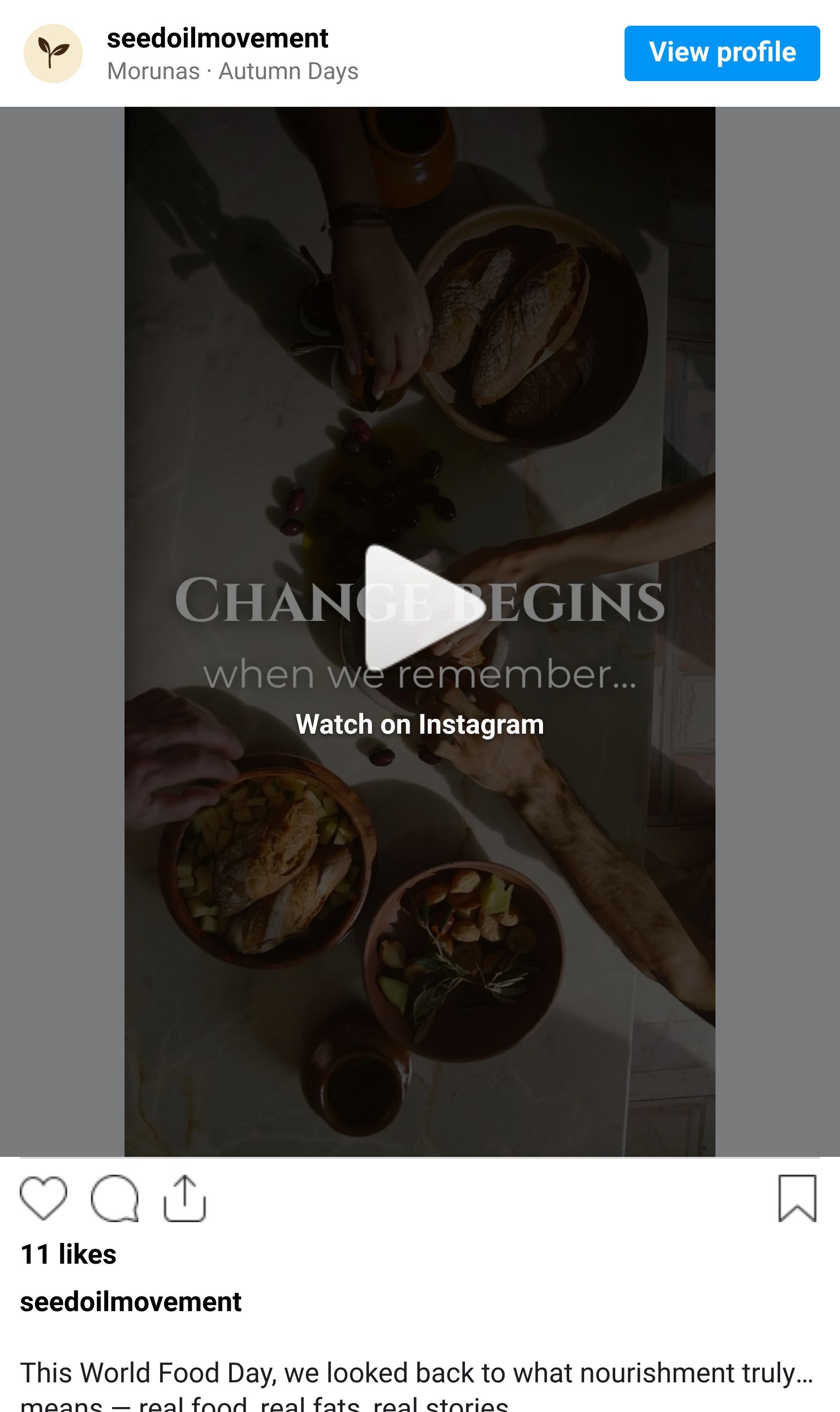
🎥 Clip of the Week — “Change begins when we remember”
This year, one message resonated more than any other.
Not because it was loud — but because it named something many people already felt.
On World Food Day, we paused the conversation around trends and advice, and returned to something more foundational: memory.
What People Actually Noticed This Year

As the year closes, we asked a simple question: not to experts, not to influencers, but to people actually living these changes day to day.
Not what they believe.
What they experienced.
As we close the year, what’s one thing you’re doing to support your body through the holidays?
“I’m keeping my meals familiar. Same foods, same fats, less experimenting. That made this week feel calmer.”
“I stopped trying to compensate. I eat simply before and after, and let the rest be what it is.”
“I’m cooking less, but choosing better ingredients when I do. That mattered more than I expected.”
“I’m letting this time stay imperfect — and supporting my body with consistency instead of rules.”
What has food taught you about yourself this year?
“That stress affected my digestion more than any single ingredient.”
“That fewer ingredients made me feel more nourished, not less.”
“That I was chasing variety when what I really needed was stability.”
“That paying attention changed my relationship with food more than learning new rules.”
None of these are resolutions.
They’re observations.
And taken together, they point to something important:
the most meaningful changes this year didn’t come from trying harder —
they came from noticing what actually worked.
Holding Your Ground When the Room Feels Loud

For many people, the hardest part of the holidays wasn’t the food.
It was the conversations around it.
When your relationship with food has changed through experience — not ideology — it’s easy to feel caught in between. You don’t want to argue. You don’t want to explain. But you also don’t want to abandon what you know works for your body.
We sit in this tension constantly. What we’ve learned is simple:
information travels best when it’s embodied, not defended.
You don’t need to justify your plate.
You don’t need to convince anyone over one meal.
And you don’t need to carry the responsibility of educating a room that didn’t ask.
Often, the most stabilizing thing you can do is support your own nervous system first — warm food, familiar fats, simple meals — and let everything else be secondary.
Ease is felt.
It doesn’t need to be explained.
🍗 Butter-Roasted Chicken & Vegetables

A grounding dish for the days between Christmas and New Year
This is not celebratory food.
It’s steady food.
The kind that brings your body back into rhythm when the noise fades and routines haven’t fully returned.
🧈 Ingredients
Serves 3–4
Protein
4 bone-in, skin-on chicken thighs or drumsticks
Vegetables (choose what you have)
3–4 carrots, cut into large chunks
2–3 potatoes or sweet potatoes, cut into wedges
1 large onion, quartered
Optional: squash, parsnips, or Brussels sprouts
Fats
3–4 tbsp butter or ghee
Optional: 1 tbsp extra-virgin olive oil (added after roasting)
Seasoning
Sea salt (to taste)
Freshly ground black pepper
Fresh or dried herbs: rosemary, thyme, or sage
Finish
½ lemon, cut into wedges
Optional: 4–6 garlic cloves, left whole and unpeeled
🔥 Method
Preheat the oven
Set oven to 400°F / 200°C.Prepare the vegetables
Place vegetables on a large baking tray.
Toss with half of the butter or ghee, a generous pinch of salt, and black pepper.Add the chicken
Nestle the chicken pieces on top of the vegetables, skin side up.
Rub the remaining butter or ghee directly onto the chicken skin.Season generously
Sprinkle salt, pepper, and herbs over everything.
Scatter garlic cloves around the pan if using.Roast uncovered
Roast for 45–55 minutes, until:the chicken skin is deeply golden and crisp
vegetables are tender with caramelized edges
Finish gently
Remove from oven and let rest for 5 minutes.
Squeeze fresh lemon juice over the pan just before serving.
Add a drizzle of olive oil only if desired.
This dish travels well, reheats beautifully, and often tastes even better the next day.
🧠 Why This Works (Nutritional Perspective)
Estimated per serving (approx.):
Protein: ~30–35 g
Fat: ~25–30 g
Carbohydrates: ~20–30 g (from vegetables)
Calories: ~450–550 kcal
Why it’s grounding:
Bone-in chicken provides protein + minerals
Saturated fats support satiety and stable energy
Root vegetables replenish glycogen without spikes
Simple seasoning reduces digestive load
This is food your body recognizes.
🌿 Seed Oil–Free Tip
Roasting is one of the fastest ways to feel the difference between fats.
Industrial seed oils:
oxidize at high heat
flatten flavor
leave food feeling heavy and unsatisfying
Butter and ghee:
tolerate oven temperatures
carry aroma and richness
support natural browning without breakdown
When food tastes better and feels better, restraint happens naturally — no rules required.
This is how real food quietly regulates appetite, mood, and digestion.
If the holidays feel charged, you’re not alone.
We’re here to help you move through them with calm, clarity, and real food — not debates.
If this resonated, share it with someone who might need a gentler entry into Christmas.
And stay with us as we carry these lived lessons into the new year.
— The SeedOil.com Team