
Most people assume that eating better requires more effort.
More discipline.
More awareness.
More willpower.
But the real opportunity isn’t in trying harder — it’s in designing an environment that makes good choices automatic.
When you shift the structure around food, you stop fighting yourself.
You start building systems that quietly work in your favor.
That’s the essence of structural change: it multiplies your effort instead of demanding more of it.
So if the goal is better food habits this year, the question becomes:
How can you make the right thing the easy thing?
Where food habits are really decided

Food decisions happen long before you sit down to eat.
They’re shaped by what’s stocked, what’s visible, and what’s familiar.
That means the most effective way to improve how you eat is to improve the context in which you eat.
A few small structural upgrades can create outsized results:
Keep ingredients you actually want to use within reach
Batch-cook or prep one reliable meal base each week
Replace one processed staple with a whole-food version
Each of these changes reduces friction — and friction is what usually breaks consistency.
What effort-based change misses — and what to do instead
Effort-based change asks for constant attention.
Structural change asks for one-time setup.
Instead of tracking every bite, build a system that quietly guides you:
• Simplify your grocery list around real ingredients
• Standardize a few go-to meals that fit your goals
• Make your kitchen reflect the way you want to eat
Once the structure is in place, discipline becomes optional.
SeedOil Lens

Seed oils are a perfect example of how structure drives outcomes.
They’re not a willpower issue — they’re a supply issue.
They show up because they dominate the food environment.
The value of addressing seed oils isn’t just avoiding them; it’s learning how to rebuild your defaults.
When you stock and cook with traditional fats, you’re not just removing something — you’re adding stability, flavor, and nutrient density back into your meals.
That’s a structural upgrade with compounding benefits.
In Practice — A Structural Starting Point

Here’s how to apply this thinking right now:
• Pick one everyday meal you repeat often
• Swap the cooking fat for a traditional one (olive oil, butter, tallow)
• Notice how that single change cascades through your week
This small shift improves flavor, satiety, and nutrient absorption — all without extra effort.
The goal isn’t to overhaul everything.
It’s to make one better default that quietly improves everything else.
This Week’s Highlights
🎬 Post Highlight — This Week’s Carousel
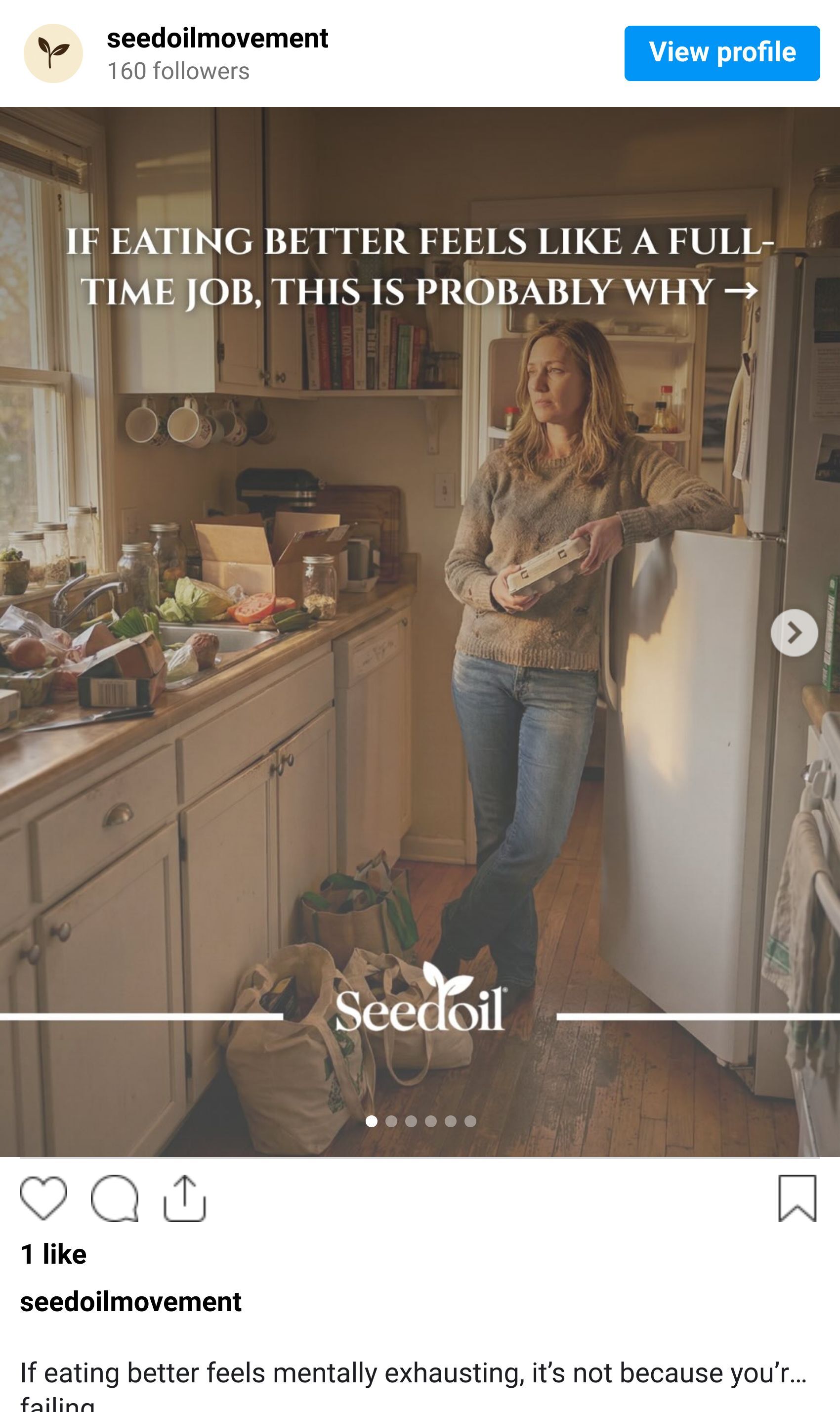
If eating better feels like a full-time job, this is probably why →
A visual breakdown of how food habits fail when they rely on constant effort — and how changing your defaults (not your discipline) makes better eating feel lighter and more automatic.
🍽️ Recipe Highlight — A Reliable Default
This recipe isn’t about cooking something impressive.
It’s about having one option that always works.
Mushrooms sautéed in garlic butter are the kind of meal that fits into real life: quick, flavorful, and built on a traditional fat that doesn’t require rules or tracking. It’s the type of dish you make when you’re tired, short on time, or simply don’t want to think — and that’s exactly why it matters.
When better eating is supported by meals like this, it stops feeling like a project.
It becomes a baseline you can return to, again and again, without effort.
👉 Read the full recipe here:

This newsletter is part of an ongoing, context-first exploration of fats, food systems, and everyday eating.
If this way of thinking helps you simplify and improve your food habits, stay with us.
We’ll keep focusing on practical leverage — the kind that makes better eating effortless.
— The SeedOil.com Team