
You've probably noticed that nutritional advice has a strange property: it never settles.
Every few months, something that was once considered healthy gets reclassified. A fat becomes a villain, then gets rehabilitated. A grain goes from superfood to inflammatory. An oil that spent decades in professional kitchens quietly disappears from the conversation while a new one takes its place.
Most people interpret this as the messiness of emerging science. The research is complicated, the body is complex, the truth takes time to surface.
That's partially true. But it's not the whole picture.
The Value of Your Uncertainty

Here's a question worth sitting with: who benefits when you don't know what to eat?
Not you. Uncertainty doesn't make you a better consumer — it makes you a more anxious one. And anxious consumers are extraordinarily profitable. They buy the new supplement. They download the new app. They pay a premium for the product with the cleanest-looking label. They keep searching, which means they keep spending.
The food industry understood this early. A consumer who is certain about what they want is a consumer with power — they can make deliberate choices and stick to them. A consumer who is uncertain is permanently in motion, perpetually open to the next repositioned product.
Nutritional confusion, in this light, isn't a side effect of a complicated science. It's a feature of a system that profits from the search.
How It Works

The mechanism isn't complicated once you see it.
Industrial food companies fund research. Not always fraudulent research — often legitimate studies that happen to ask very specific questions with very specific parameters. A study that shows margarine is better than butter for one particular cardiac marker in one particular population, under one particular set of conditions, generates a headline that reads: Butter Linked to Heart Disease.
That headline enters the information environment. It contradicts last year's headline. The average person trying to eat well absorbs both, feels confused, and concludes that nobody really knows anything — including themselves.
Meanwhile, the products stay the same. The seed oils, the refined grains, the industrial stabilizers — these don't change. Only the conversation around them does. And keeping that conversation fragmented and contradictory is extraordinarily useful for the companies that depend on those ingredients.
This is the playbook San Francisco just named in court.
The Lawsuit That Changed the Frame
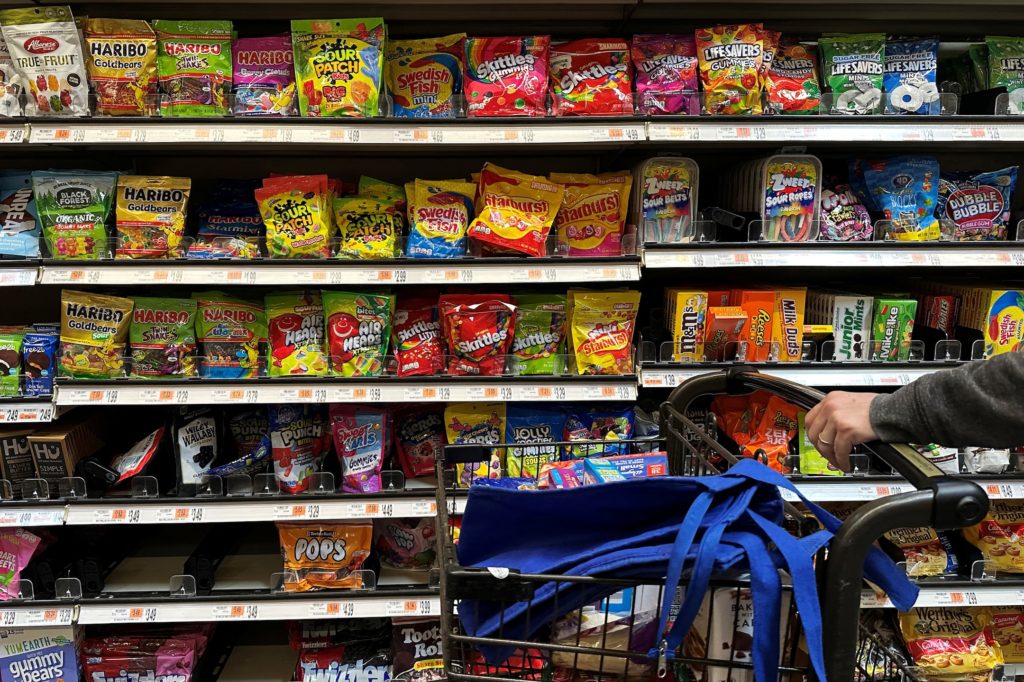
This week, San Francisco filed a lawsuit against 11 of the nation's top food manufacturers. The legal argument isn't about a specific ingredient or a misleading label. It's about deliberate design — that these companies knowingly engineered products to override consumer choice, and then spent decades keeping the public conversation focused on individual behavior rather than industrial accountability.
The comparison to tobacco is explicit and intentional. Not because ultra-processed food and cigarettes are the same thing — but because the strategy is identical. Keep the public debating whether the product is harmful. Fund research that muddies the water. Position the conversation around personal responsibility. And above all, never let the frame shift from what are you choosing to what were you designed to choose.
San Francisco shifted the frame.
The legal outcome will take years and may not succeed. That's almost beside the point. What matters is that a major American institution just said out loud: the confusion wasn't accidental. It was manufactured.
What Clarity Actually Looks Like

If confusion is the product, clarity is the exit.
Not the kind of clarity that comes from finding the right expert who finally tells you the definitive list of foods to avoid. That's just trading one authority for another — and it keeps you in the same loop.
The kind of clarity that actually changes something is structural. It asks different questions.
Not is this ingredient bad for me — but why is this ingredient here. Seed oils aren't in 80% of packaged foods because they're the healthiest option. They're there because they're the cheapest, most stable, most scalable input available. That's not a health argument — it's a logistics argument. And once you understand the logistics, the health implications become almost self-evident.
Not what should I eat — but what is this designed to make me do. Ultra-processed foods are engineered for repeat consumption. Understanding that doesn't require a nutrition degree. It requires recognizing that the product was optimized for something other than your long-term wellbeing.
Not who is right about butter vs. margarine — but who funded the study and what were they trying to protect. This isn't conspiracy thinking. It's basic source evaluation — the same critical thinking applied to any other industry with financial stakes in the research.
These questions don't give you a food list. They give you a frame. And a frame is more durable than any list, because it works on ingredients that haven't been invented yet.
One Last Thing
We’re continue building our app because we believe the alternative to confusion isn't more information. It's infrastructure.
A map doesn't tell you everything about a city. It tells you where you are and where you can go. That's enough to move.
— The SeedOil.com Team